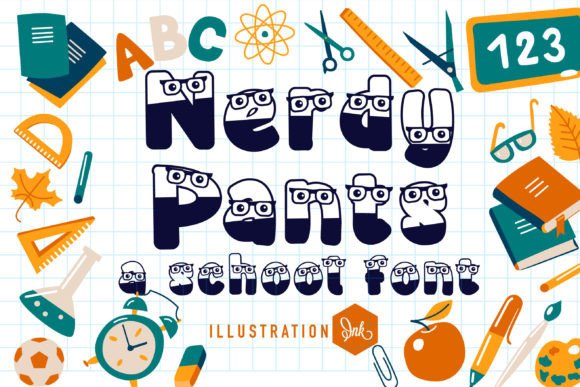
Nerdy Pants: A Hand-Crafted Font with Bespectacled Charm
There are typefaces that simply occupy space on a page, and then there are those that tell a story before a single word is read. The latter is the realm of the truly special design assets, the ones that inject personality and warmth into a project. If you’ve ever felt the need for a font that feels less like a digital product and more like a friendly, hand-drawn note from a clever companion, you might have just found your match. This particular hand-crafted font, with its bi-color letters and iconic kawaii-style glasses, isn't just a collection of characters; it's a vibe. It’s the visual equivalent of a cozy library, a brainstorming session with your most creative friend, or the logo for a brand that doesn't take itself too seriously but absolutely means business.
More Than Just a Pretty Face: The Personality Behind the Pixels
What immediately sets this typeface apart is its distinct character. The "Nerdy Pants" aesthetic is built on a foundation of approachable intelligence. The bi-color lettering isn't a gimmick; it’s a thoughtful design choice that adds depth and a playful, layered effect, making headlines pop and logos memorable. The defining feature, those cute kawaii-style glasses, transforms each letterform into a little character. This isn't the cold precision of a geometric sans serif font, nor the flowing elegance of a traditional script font. It sits in a unique category: a modern typography solution that blends the organic feel of a handwritten font with a clear, intentional, and whimsical design language.
This personality makes it incredibly versatile for projects aiming for a specific emotional connection. It speaks to a sense of curiosity, creativity, and friendly expertise. Imagine it gracing the cover of a children's educational book, defining the brand identity for a quirky coffee shop, or setting the tone for a tech blog that explains complex topics in simple, human terms. The font does the heavy lifting of establishing tone, allowing you, the creator, to focus on your message. It’s a premium font that serves as a foundational piece of a larger visual story, helping to build brand recognition through sheer personality.
From Screen to Shelf: Real-World Applications That Shine
The true test of any creative font is how it performs in the wild. A typeface might look stunning in a specimen sheet, but does it hold up on a bustling Instagram feed, a product label, or a website header? This is where the practical magic of this hand-drawn font comes into play. Its clear, friendly forms ensure readability isn't sacrificed for style, a crucial balance in effective design.
For branding and logo design, it offers an instant injection of character. A small business selling handmade crafts, a podcast about geek culture, or an indie game studio could build an entire brand identity around its unique charm. It’s a typeface that feels authentic and human, which is a powerful asset in a market saturated with sterile, corporate visuals.
Consider its use in packaging design. On a coffee bag, a box of artisanal cookies, or a set of stickers, the font’s playful nature can attract the right audience and communicate the product's handmade or creative quality at a glance. The bi-color effect can be leveraged in print to create eye-catching, two-tone labels that stand out on a crowded shelf.
In the digital realm, it’s a powerhouse for social media graphics. It’s perfect for creating quote images, story highlights, promotional banners, and video thumbnails that stop the scroll. Its distinctive look ensures your content is instantly recognizable in a fast-moving feed, boosting engagement and reinforcing your visual consistency. For web design and blogs, using it for headings, pull quotes, or call-to-action buttons can break up the monotony of body text and guide the reader's eye, making your site more engaging and memorable.
Making It Work: Practical Tips for Pairing and Presentation
Introducing a font with such a strong personality into your workflow requires a bit of strategy. The goal is to let it shine without overwhelming your design. Think of it as the lead singer in a band—it needs a solid rhythm section to support it.
Mastering Font Pairing: The key is contrast. Pair this display font with a simple, clean sans serif font or a classic serif font for body text. A font like Open Sans, Lato, or even a timeless serif like Georgia will provide a neutral, highly readable foundation that allows your headings in "Nerdy Pants" to capture attention without causing visual clutter. Avoid pairing it with another decorative or handwritten font, as this will almost always lead to a chaotic and difficult-to-read layout.
Readability First: While the character forms are clear, it’s best used for shorter bursts of text: headlines, subheads, logos, and calls to action. For long-form paragraphs, always opt for a font designed for extended reading. Test your designs at various sizes, especially for mobile viewing, to ensure the charming details don’t get lost or become distracting.
Leveraging the Details: Does the font include alternate characters, ligatures, or multiple weights? A well-crafted commercial font often comes with these extras. Using alternate letters can add a more authentic, hand-lettered feel to your designs, preventing repetitive letterforms and enhancing the organic quality. Always review the full character map and included styles before starting a project to understand all the creative tools at your disposal.
Thinking Long-Term: Licensing and Your Creative Assets
When you find a font that feels like a perfect fit, it’s easy to get swept up in the excitement. However, a practical step before any commercial project is to thoroughly understand the licensing. A font is a piece of intellectual property, and its license dictates how you can legally use it. Most premium fonts come with a license that covers specific uses—like on a website, in a mobile app, or on physical merchandise.
Check whether the license is for a single user or a team, and if it covers the number of end products or impressions you anticipate. If you're a small business owner planning to use it on your product packaging and marketing materials, ensure the license explicitly allows for that. If you're a designer creating a logo for a client, you’ll likely need a license that permits transferring the final logo file to your client for their use. Investing a few minutes to read the End User License Agreement (EULA) protects your work and ensures you can use your chosen design assets confidently and legally for all your future projects, from digital products to print materials.