Sarthina: When Brush-Lettered Typography Feels Like a Signature
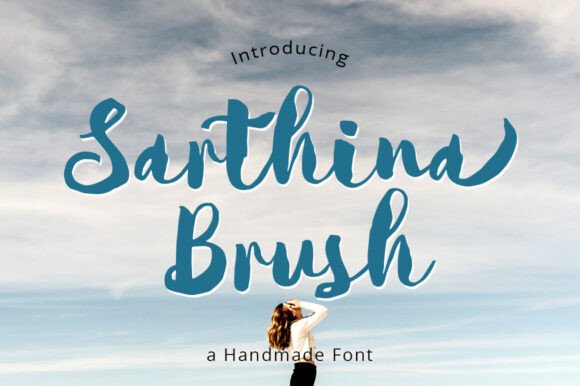
There’s a moment in every design project where the typeface either disappears into the background or steps forward to own the room. Sarthina is that second kind—a brush-lettered font with enough personality to anchor a brand identity but enough nuance to complement rather than overwhelm. It walks the line between raw artistic expression and polished professional execution, which is surprisingly hard to find in the world of script fonts.
What sets this typeface apart isn’t just its aesthetic appeal. Plenty of handwritten fonts look beautiful in isolation. The real test comes when you place that font next to a sans serif companion on a website header, or when you shrink it down on a business card and still need every letter to read clearly. Sarthina was built with those practical realities in mind, which is why it has become a go-to design asset for creatives who need typography that works as hard as they do.
A Typeface That Bridges Art and Commerce
Brush-lettered fonts occupy a unique space in modern typography. They carry the warmth and imperfection of handcrafted lettering while still functioning within digital design systems. Sarthina leans into this duality with confidence. Its strokes have that satisfying organic quality—the slight variation in weight, the natural flow between connected characters—but the letterforms are disciplined enough to maintain legibility across different sizes and applications.
For small business owners building a brand from scratch, this balance matters enormously. You want your logo to feel approachable and human, not sterile. But you also need that same typeface to hold up when it’s printed on packaging at a reduced scale or displayed as a favicon in a browser tab. Sarthina handles these transitions gracefully because it was designed with real-world usage as the priority, not just aesthetic idealism.
The font works particularly well as a display typeface—think hero sections on websites, large-scale poster headlines, or the centerpiece of a wedding invitation suite. At those sizes, the brush texture really comes alive. You can see the subtle pressure changes, the way certain strokes taper to a fine point, the gentle inconsistencies that make hand-lettering feel authentic. These details add visual interest that a standard serif font or geometric sans serif simply cannot replicate.
Practical Applications Across Creative Projects
One of the most useful things about a versatile script font is the sheer range of projects it can serve. Sarthina isn’t limited to one niche or industry. Its character adapts to context, which makes it a smart addition to any designer’s toolkit.
Consider these real-world applications:
- Brand identity systems: A bakery, florist, boutique clothing line, or artisan coffee roaster could use Sarthina as their primary logo typeface, paired with a clean sans serif for body copy. The handwritten quality immediately communicates craftsmanship and personal attention.
- Social media graphics: Instagram quotes, Pinterest pins, Facebook headers, and promotional stories all benefit from typefaces that stop the scroll. Sarthina’s expressive letterforms create visual hierarchy without needing additional decorative elements.
- Wedding and event invitations: The font’s elegant flow makes it ideal for formal stationery—save-the-dates, RSVP cards, menu designs, and program covers. It reads as sophisticated without feeling stuffy.
- Packaging design: Product labels, box designs, tissue paper prints, and thank-you cards gain personality when set in a premium script font. For brands selling handmade or artisanal goods, this typographic choice reinforces the product story.
- Editorial layouts: Magazine pull quotes, chapter headings in self-published books, and blog post titles benefit from the contrast between a expressive display font and traditional body text.
- Digital products and marketing assets: Lead magnets, email headers, course branding, and sales page designs can all leverage Sarthina to create a cohesive visual language that feels premium and intentional.
The key is matching the font’s personality to the project’s goals. A children’s party planner might use Sarthina for playful, celebratory designs. A luxury candle brand might use the same font but pair it with muted color palettes and generous whitespace to communicate refinement. Context transforms how a typeface reads.
Font Pairing and Readability Considerations
No script font exists in isolation. The real magic happens when you pair it thoughtfully with complementary typefaces. Sarthina’s brush-lettered character works best alongside typefaces that provide contrast without competition.
A few pairing strategies worth testing:
- Sarthina plus a geometric sans serif: Fonts like Montserrat, Poppins, or Raleway create a clean modern counterpoint. Use the script for headlines and the sans serif for body text, navigation, and supporting copy.
- Sarthina plus a classic serif: Pairing with something like Playfair Display or Lora creates a more editorial, traditional feel. This works well for lifestyle blogs, book covers, and boutique branding.
- Sarthina plus a monospace or slab serif: For brands that want to feel creative but grounded, combining the organic script with a structured typeface adds visual tension that feels intentional and contemporary.
Readability deserves serious attention whenever you work with any handwritten font. A few practical guidelines help ensure your designs communicate clearly:
- Avoid setting entire paragraphs in script typefaces. Use Sarthina for headlines, short phrases, logos, and accent text where its personality can shine without exhausting the reader.
- Test your designs at multiple sizes before finalizing. What looks gorgeous at 72 pixels on a desktop screen might become illegible at 14 pixels on a mobile device.
- Check color contrast carefully. Brush-lettered fonts have thinner stroke variations than blocky typefaces, so they need sufficient contrast against their background to remain readable.
- Consider your audience’s context. A wedding invitation viewed up close in hand has different readability requirements than a highway billboard or an Instagram story viewed on a phone screen.
Building Visual Consistency Across Touchpoints
One of the most overlooked benefits of investing in a quality font is the consistency it brings to a brand’s visual presence. When you use the same typeface across your website, social media profiles, printed materials, email templates, and packaging, you create a thread of recognition that ties everything together. Customers start to associate that typographic voice with your business before they even read the words.
Sarthina makes this kind of consistency achievable because it includes multiple styles and weights that cover different use cases. Rather than mixing three different script fonts across your brand materials—one for your logo, another for social graphics, a third for printed pieces—you can rely on a single typeface family to do all the heavy lifting. This simplifies your design workflow and strengthens brand recognition simultaneously.
For content creators and bloggers, this consistency translates directly into audience trust. When your Pinterest pins, YouTube thumbnails, website headers, and lead magnet covers all share the same typographic DNA, your content becomes instantly recognizable even before someone sees your name or logo. That kind of visual shorthand is invaluable in crowded digital spaces where attention is scarce and competition is relentless.
Licensing and Long-Term Value
Before committing to any commercial font for professional projects, reviewing the licensing terms is essential. Different font licenses cover different use cases—desktop installation, web embedding, app integration, merchandise production, and broadcast usage all potentially require separate permissions. Understanding what your license covers protects you legally and ensures your investment holds its value over time.
A premium font with clear, comprehensive licensing terms removes ambiguity and lets you focus on the creative work. Whether you are designing client projects as a freelancer, building assets for your own business, or creating merchandise for sale, knowing exactly what your license permits gives you the confidence to use the typeface freely and fully.
Sarthina represents one of those design investments that pays dividends across project after project. Its versatility means you will reach for it repeatedly—for the boutique branding project, the seasonal social media campaign, the product launch materials, the personal creative experiment. Good typography does not expire or go out of style when it is rooted in quality craftsmanship and thoughtful design.
The best design decisions are the ones that serve you long after the initial purchase. A typeface that elevates your work today and continues to adapt to tomorrow’s projects is not just a font. It is a creative partner.