Discover Rainbow Signature: A Handwritten Font with Natural Flow
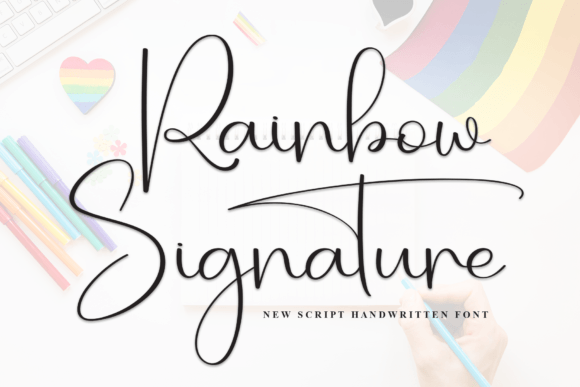
There's a certain magic that happens when a design feels personal—when it carries the warmth of a human hand rather than the cold precision of a machine. That's exactly the feeling Rainbow Signature captures. This handwritten font doesn't just sit on the page; it dances across it, with strokes that unfurl like petals in a spring breeze. For anyone tired of sterile, overused typefaces, this one offers something genuinely different: character, fluidity, and an inviting sense of authenticity that's hard to fake.
What Makes This Font Stand Out in a Crowded Market
Handwritten fonts are everywhere these days. You've probably scrolled past dozens on font marketplaces, each claiming to be "unique" or "authentic." So what sets Rainbow Signature apart? It comes down to execution. The letterforms here aren't just loosely connected scribbles pretending to be cursive. Each character has been carefully crafted with intentional variation—the kind you'd see in actual handwriting, where no two letters look exactly alike but they still feel cohesive as a family.
The graceful curves give it a romantic, approachable quality without tipping into sentimentality. It's elegant but not stuffy. Warm but not sloppy. That balance is surprisingly difficult to achieve in font design, and it's what makes this typeface versatile enough to work across so many different contexts. Whether you're designing a wedding invitation or a social media graphic for a boutique candle brand, Rainbow Signature brings that handcrafted sensibility without sacrificing readability.
Where This Font Truly Shines: Real-World Applications
Let's talk specifics, because a font is only as good as the projects it elevates. Here's where Rainbow Signature earns its place in your design toolkit:
Brand Identity and Logo Design
If you're building a brand that needs to feel personal—think artisan goods, wellness products, boutique studios, or lifestyle blogs—a handwritten script font can become the cornerstone of your visual identity. Rainbow Signature works beautifully as a primary logo typeface or as a secondary accent alongside a clean sans serif font. The key is letting it do the heavy lifting on brand names and taglines where personality matters most, while pairing it with something more structured for body copy.
Packaging and Product Design
Shelf appeal matters. When a customer picks up a product, the typography on that label communicates volumes before they read a single word. Rainbow Signature's organic, flowing style suggests craftsmanship and care—qualities that resonate with consumers shopping for specialty foods, handmade cosmetics, artisan candles, or small-batch goods. It signals that a real person made this, not a factory.
Social Media Graphics and Content Creation
Platforms like Instagram and Pinterest are visually driven, and fonts play a huge role in stopping the scroll. This creative font adds personality to quote graphics, story templates, promotional posts, and highlight covers. Because it has such a distinctive look, it can help establish visual consistency across your feed—something that's crucial for brand recognition on crowded social platforms.
Invitations and Event Materials
Wedding invitations, baby shower cards, milestone birthday announcements—these are projects where a handwritten font feels most natural. Rainbow Signature's flowing elegance lends itself perfectly to formal and semi-formal event stationery. It pairs well with delicate floral illustrations, watercolor backgrounds, and soft color palettes.
Website Headers and Blog Design
Used sparingly and strategically, a script font like this can add warmth to digital spaces. Blog post titles, homepage hero text, newsletter sign-up sections, and about page headers are all places where Rainbow Signature can inject personality without compromising the overall readability of your site. Just remember: it's a display font, not meant for paragraphs of body text.
Print Materials and Editorial Layouts
Magazines, lookbooks, brochures, and posters benefit from typographic variety. A handwritten accent font breaks up the visual monotony of standard serif and sans serif pairings. Pull quotes, chapter headings, and sidebar callouts become more engaging when set in a typeface with this much personality.
Merchandise and Digital Products
Tote bags, mugs, t-shirts, stickers, printable wall art, digital planners—the merchandise and digital product space is booming, and typography is often the differentiator between a generic design and one that sells. Rainbow Signature's handcrafted feel translates well to both physical and digital products, giving them an artisan quality that customers are willing to pay a premium for.
Pairing Rainbow Signature with Other Typefaces
One of the most common questions designers have about script and handwritten fonts is what to pair them with. Rainbow Signature's flowing, decorative nature means it benefits from contrast. Here are a few approaches that work well:
- With a geometric sans serif: Fonts like Montserrat, Poppins, or Raleway create a modern, clean counterbalance to the organic curves of Rainbow Signature. This combination works well for lifestyle brands, tech startups with a human touch, and contemporary editorial layouts.
- With a classic serif: Pairing with something like Playfair Display or Lora creates a more traditional, sophisticated feel—ideal for luxury branding, high-end invitations, and editorial design.
- With a simple sans serif for body text: No matter which direction you go for headlines, always use a highly readable font for paragraphs. Open Sans, Lato, or Source Sans Pro are reliable choices that won't compete with Rainbow Signature's personality.
The trick is to let each font have a clear role. Rainbow Signature handles display moments—headlines, logos, pull quotes, accent text. Your secondary font handles the functional work: navigation, body copy, captions, data. When every typeface has a job, your designs feel intentional rather than chaotic.
Readability Considerations Worth Keeping in Mind
No matter how beautiful a font is, it fails if people can't read it. Rainbow Signature performs well at larger sizes, which is typical for premium script fonts. But there are a few practical guidelines worth following:
- Size matters. Use it at 24pt and above for screen applications. For print, you have slightly more flexibility, but anything below 14pt may lose legibility depending on the paper and printing method.
- Background contrast is essential. Handwritten fonts with thin, flowing strokes can disappear against busy backgrounds or low-contrast color combinations. Always test your text against its intended background before finalizing a design.
- Spacing and line height need attention. Script fonts often benefit from slightly increased letter-spacing and generous line height. Crowded text kills readability faster with decorative fonts than with standard typefaces.
- Context determines suitability. A five-word headline? Perfect. A 200-word product description? Use something else. Know when to deploy this font and when to let a workhorse typeface do the job.
Licensing and Practical Considerations for Commercial Use
If you're a designer, small business owner, or content creator planning to use Rainbow Signature in client work or commercial products, licensing is something to pay attention to. Most premium fonts come with specific license terms that outline how the font can be used—whether that's in digital products for sale, printed merchandise, client branding projects, or software applications. Before purchasing, review the license carefully. Some licenses cover unlimited personal and commercial use, while others may require additional licenses for specific applications like app embedding or large-scale merchandise production.
This isn't just about legal compliance—it's about respecting the work of the type designers who created the font. Quality font design is a craft that takes significant time and skill, and fair licensing supports the continued creation of beautiful design assets for everyone.
Testing Before Committing
Most font marketplaces and foundries offer preview tools that let you type custom text and see how the font looks in different sizes. Use these. Type your actual brand name, your tagline, a sample headline from your project. Don't just admire the specimen sheet—see how Rainbow Signature handles the specific letters and combinations your work requires. Pay attention to how certain letter pairs connect, especially in a script font where ligatures and alternates make a big difference in the final look.
If the font includes multiple styles—swashes, alternates, or stylistic sets—explore those options. Many designers purchase a font and only use the default characters, missing out on the additional variety that can make their designs even more distinctive. A well-equipped handwritten font often includes alternate capital letters, decorative swashes, and contextual alternates that give you creative flexibility.
Rainbow Signature brings a natural, handcrafted quality to any project it touches. It won't be the right fit for every design challenge—that's true of any typeface. But for the projects where warmth, personality, and elegance matter, it's a font that delivers real visual impact without feeling overdone. The best typography choices are the ones that serve the message, and sometimes that message is simply: a real person made this, and they cared about every detail.